The Night the Vigilantes Rode Into Hell Gate
"Before Missoula was Missoula, Hell Gate was a rough frontier settlement where fear traveled faster than the law. In January 1864, Montana Vigilantes rode west from Virginia City, captured six accused road agents, and hanged them after proceedings that were far closer to frontier judgment than modern justice. The story still matters because it is not a clean tale of heroes and villains, but a reminder that Missoula’s beginnings were shaped by danger, rumor, and men deciding who had the right to call something justice."
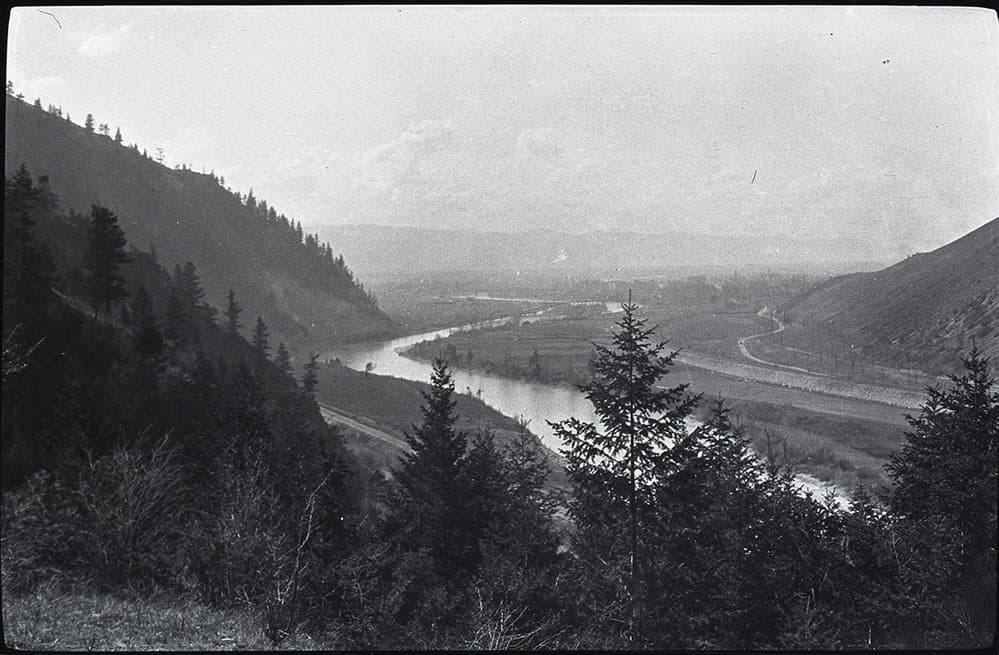
Before Missoula was Missoula, there was Hell Gate.
It sat a few miles west of today’s city, near the Clark Fork, a small settlement built around trade, travel, and whatever order people could make for themselves on the edge of the frontier. By the winter of 1864, that order was thin.
Gold had changed Montana fast. It pulled men into the mountains, filled roads with pack trains, and made every trail a target. Robberies and killings were blamed on “road agents,” the name given to highwaymen who preyed on travelers moving gold and supplies through the territory.
The most famous name tied to that fear was Henry Plummer, the sheriff of Bannack, later accused of leading a criminal gang known as the Innocents. Whether every accusation against Plummer’s supposed network was true is still argued by historians. But in January 1864, the men calling themselves the Montana Vigilantes were not waiting for a courtroom to sort it out.
They had already hanged Plummer and others in Bannack and Virginia City. Then they rode west.
According to an old Missoulian centennial account preserved by Old Missoula, 21 vigilantes left Virginia City in January 1864 to find suspected road agents who had scattered into the Hell Gate country. One of their first targets was Cyrus Skinner, a saloonkeeper with a rough reputation and suspected ties to Plummer’s circle.
Skinner was taken at Skinner’s Saloon. Aleck Carter was found nearby. Johnny Cooper, Bob Zachary, George Shears, and “Whisky Bill” Graves were also captured in the surrounding country.
The story reads like frontier legend because, in some ways, it is one. There are saloons, horses, hidden signals, stolen animals, whispered passwords, and men dragged into the night by torchlight. But the hard part is what came next.
Skinner and Carter were questioned near the Worden and Higgins store. The old account says they were tried by a “jury,” but that word should give us pause. This was not a modern courtroom. There was no defense attorney, no appeal, and no legal system strong enough to stop the vigilantes even if someone wanted to.
The vote was taken by men stepping to opposite sides of a room.
By the end, all six men were hanged.
Skinner and Carter were executed after midnight near Higgins’ corral. Store boxes served as the drops. Shears was hanged in a barn. Whisky Bill Graves, captured near Fort Owen, was hanged elsewhere, reportedly out of concern for Native people living nearby who did not want a hanging place close to them.
That is the part of the story that still matters.
It is easy, from a distance, to turn the vigilantes into clean frontier heroes. It is just as easy to turn them into nothing but murderers. The truth is harder and more useful.
Hell Gate in 1864 was a place caught between danger and law. People feared robbery. They feared murder. They feared what could happen when gold, isolation, and rumor all traveled the same road. But fear also gives men permission to move fast, and fast justice has a way of becoming something else.
The vigilantes may have believed they were saving the territory. Some of the men they captured may well have been dangerous. But belief is not the same as proof, and punishment is not the same as justice.
That is why this story still belongs to Missoula.
Not because it gives us a simple tale of good men cleaning up a bad town. It does the opposite. It reminds us that Missoula’s beginning was rough, uncertain, and morally complicated. Before there were courts strong enough to hold the line, men with ropes tried to draw it themselves.
Hell Gate did not last long. The settlement faded, and Missoula rose nearby.
But for one winter night in 1864, the old town became the stage for a question every community eventually has to answer:
When the law is weak, who gets to decide what justice is?